
January 5th, 2012 by Katrina Marland
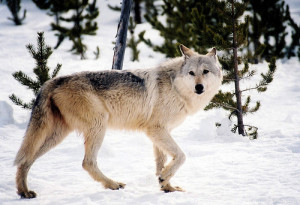
Gray wolf (Credit: MacNeil Lyons, National Park Service)
To understand, we have to back up several years. Northern Rocky Mountain wolves, a subspecies of gray wolves, were once the dominant predators in the Yellowstone region and throughout their native range across the Rockies. But humans hunted them for decades until the 1970s, when there was literally no trace of them left in the park. In the 1990s, when the wolves were still nowhere to be found, Yellowstone worked with the U.S. Fish & Wildlife Service to reintroduce the wolves to what was once their native habitat.
Today, more than 100 wolves call Yellowstone home, and according to a recent study by researchers at Oregon State University, the new residents have made quite a few changes. Some changes, such as a dip in the park’s elk population, come as no surprise. Other changes, while indirect, were widespread and unexpected. The wolves have actually helped the ecosystem support more and healthier trees, greater numbers of songbirds and even healthier aquatic life.
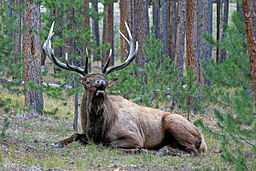
Adult elk in Yellowstone National Park (Credit: Flicka/wikimedia)
With the reintroduction of wolves, the elk population is decreasing — not so much as to put them in danger, but enough to make a big difference to Yellowstone’s forests — and the trees are coming back to full strength. Able to keep their leaves and bark longer, the trees are growing larger and healthier and living long enough to produce more trees. So much so that the forests are seeing greater populations of yellow warblers, willow flycatchers and other songbirds. Since the trees aren’t being fed upon as much, they’re also free to provide more food for other animals, like beavers. The beavers in turn create more dams, which help provide habitat for many aquatic species, including fish, frogs and other types of reptiles and amphibians. Even the bison populations increased since there is now more food for foraging. All this just because some wolves moved into the neighborhood. I’ll never cease to be amazed at how each little piece of an ecosystem is so intricately connected to everything else.
Click here to check out this neat blog (source)

No comments:
Post a Comment