
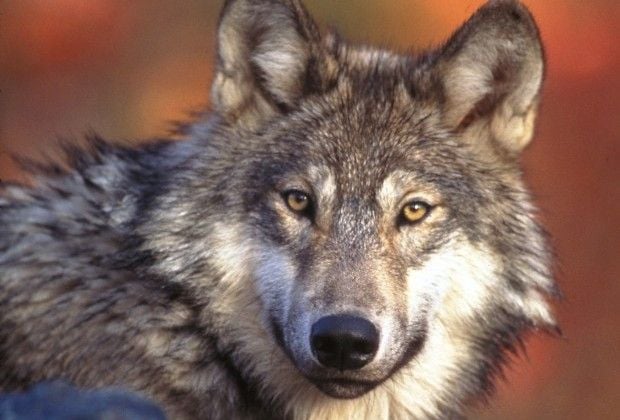
Environmental groups are challenging the federal government's transfer of wolf management to the state of Wyoming.
U.S. District Judge Amy Berman Jackson in Washington this month denied a request from the U.S. Fish and Wildlife Service and the state of Wyoming to transfer one lawsuit to federal court in Cheyenne, where a similar case already is pending.
Environmental groups in both lawsuits claim Wyoming's management plan classifying wolves as predators that can be shot on sight in most of the state is inadequate. They want the courts to restore federal protections.
Wyoming's wolf management plan allows trophy hunting in a flexible zone along the border of Yellowstone National Park. The state game department recently reported that hunters killed 68 wolves in the state from Oct. 1, when federal management stopped, through Dec. 31. Of those, 42 were killed in a trophy hunting zone bordering Yellowstone National Park, while 26 were killed as unprotected predators elsewhere in the state.
The game department is proposing to reduce wolf hunting quotas by half for this fall's hunting season. An agency official told the Casper Star-Tribune recently that the state's wolf population couldn't withstand another similar hunting season like last year's without coming dangerously close to the required minimum set in Wyoming's delisting plan.
Wyoming must maintain at least 10 breeding pairs of wolves and at least 100 animals outside of Yellowstone and the Wind River Indian Reservation. Wildlife managers say the state had about 300 wolves outside of Yellowstone, where no hunting is allowed, when state management began Oct. 1.
Ralph Henry, deputy director of litigation with The Humane Society of the United States in Washington, D.C., said Tuesday that his group is pleased that Jackson refused the request from the federal wildlife agency and Wyoming to transfer his group's lawsuit to Wyoming. Jackson has merged the lawsuit brought by the Humane Society and other groups together with another lawsuit filed by the Defenders of Wildlife and others.
"We're very pleased that she kept both of these cases which involve the majority of litigants in Washington, D.C., because it's an issue of national importance," Henry said.
The federal government reintroduced wolves to Yellowstone in the mid-1990s. In recent years, Congress ended federal protection for them in Montana and Idaho while prohibiting legal challenges to state management in those states. The delisting of wolves in Wyoming, however, had no such prohibition against legal challenges.
In her ruling, Jackson stated delisting wolves in Wyoming has great national significance. She stated ending federal protection for wolves in Wyoming affects the wolf population across the entire northern Rocky Mountains. "Although the delisting rule is aimed at gray wolves located in Wyoming, wolves often cross state lines, sometimes traveling hundreds of miles," she wrote.
Renny MacKay, spokesman for Wyoming Gov. Matt Mead, said Tuesday that the governor believes challenges to the state's wolf management plan should be heard in Wyoming.
"We believe this is a Wyoming issue, affecting the citizens of Wyoming and Wyoming's wolves," MacKay said. "We believe that matters of strong local interest, such as this, should be decided at home."
MacKay said the decision to hear the case in Washington won't affect the state's ability to defend Wyoming's wolf management practices. "Wolves in Wyoming are clearly recovered," he said. "Our management plan is based on the best available science, committing to the sustainability of the wolf population and genetic connectivity in the Northern Rockies. More importantly, our wolf management since delisting has proven the State's ability and commitment to responsibly manage wolves."
U.S. District Judge Alan B. Johnson of Cheyenne is presiding over a similar lawsuit in which eight environmental groups are challenging the Wyoming wolf delisting.
Johnson granted a request last week from the Safari Club International and the National Rifle Association to intervene in the lawsuit to make sure the interests of people who hunt wolves are represented. The same groups have asked to intervene in the lawsuit pending in Washington, D.C
source
