Thursday, November 5, 2015

It's not ‘mission accomplished’ for Oregon #wolves

Oregon Department of Fish and Wildlife/AP File Photo
This remote camera photo taken May 3, 2014, shows the wolf OR-7 on the Rogue River-Siskiyou National Forest in southwest Oregon.
 
It wasn’t so long ago that wolves were a permanent part of Oregon’s landscape.

Last year, 535,000 people visited Crater Lake.

These numbers were a new record for Oregon’s only national park, and thanks to an advertising campaign by Travel Oregon and the exploding popularity of outdoor recreation in the state, this year’s attendance will likely set a new record.

While the natural beauty of Crater Lake has long delighted visitors, lucky park-goers have only recently been treated to an encounter that would have been unthinkable of five, 10, or even 50 years ago: the opportunity to hear the howl of a wolf in the wilderness.

It wasn’t so long ago that wolves were a permanent part of Oregon’s landscape. However, an aggressive, state-sponsored hunting, trapping and poisoning campaign successfully annihilated the population, culminating in 1947 when the last recorded wolf bounty was paid out.

And with that, wolves were gone from Oregon.

It is only recently that wolves have started to re-establish themselves. Oregon’s known wolf population is around 80 adults, almost entirely confined to the Northeast corner of the state. There are, of course, a few notable exceptions. OR-7, Oregon’s world-famous wandering wolf, established the first pack in the Cascade Mountains in nearly 70 years. Other wolves, like OR-3, who recently joined his brother near Crater Lake, or the newly discovered Shasta Pack in California, have also successfully departed from Eastern Oregon. Some, like OR-22 who was tragically shot by a coyote hunter in Malheur County, have not been so successful. And while a great deal of fanfare greets each new, dispersing wolf, the fact of the matter is that these announcements are too infrequent to guarantee more than a token Oregon wolf population.

Despite the tiny number of wolves in the state, and the scarcity of the animals throughout all but a fraction of their suitable habitat, Oregon’s Department of Fish and Wildlife is bowing to pressure from the Oregon Cattlemen’s Association and other special interests to remove them from the state’s endangered species list.

They are so eager to mollify a vocal minority and begin reducing protections for gray wolves that they have bypassed incorporating any independent scientific feedback into their plan, an important part of the delisting process and one required by law.

In defiance of Oregon’s Endangered Species Act, the state also relies on wolf populations elsewhere to justify their plan. This rationalization is akin to saying there are plenty of coho salmon in Alaska, so it is acceptable to let them go extinct here.

Moreover, Oregon’s Fish and Wildlife Commission is scheduled to both announce a plan and vote on it during a Monday meeting in Salem, circumventing important public feedback and process.
Oregon’s wolves deserve better, and there is an opportunity here for leadership from Gov. Kate Brown. She should direct Fish and Wildlife to solicit a meaningful and independent scientific review of the delisting report. The agency must then commit to reviewing that science and incorporating it, rather than moving ahead unilaterally despite legitimate criticisms from independent biologists. Bypassing scientific review only serves to delegitimize ODFW and its wildlife management work.

The governor should also call upon her wildlife commission to allow a full public process to play out before voting on a final delisting plan.

Wolves are only now regaining their rightful place as a fixture of Oregon’s wilderness. Now is not the time to declare “mission accomplished” and turn our backs on their recovery. The success of Oregon’s wolves to this point has relied on an adherence to science, public process, and the law. We are currently on a course that undermines all of these vital aspects.

If we are to make good on our sins of the past, to acknowledge wolves their place on the Oregon landscape and to allow future generations the fortune to hear the howl of a wild wolf from the rim of Crater Lake, we must commit ourselves to doing this right.

 
Steve Pedery is the conservation director for Oregon Wild, a conservation organization representing more than 16,000 members across the state and dedicated to protecting and restoring Oregon’s wildlands, wildlife and waters as an enduring legacy for future generations.

source 

A Day of Action for Wolves Across the Country: Gray Wolves Need Your Help Today!

Banner photo courtesy of Rachel Tilseth, WODCW 

Thursday November 5, 2015.  Gray wolves across the country need your help!  Once again wolves are being targeted for removal from federal protections due to a rider attached to the 2016 appropriation bill.  This anti-wolf legislation would make wolves vulnerable to hunting near Yellowstone National Park, Wyoming and the Great Lake states, ultimately weakening the Endangered Species Act.

Starting today we need you to contact political leaders to help oppose this rider that is now before Congress, by following the easy steps below:

  • WHEN:  Thursday November 5, 2015
  • WHAT:  Email your U.S. Senators and Representative in Congress asking them to “Please remove the anti-wolf rider from the Interior Appropriations Bill”. A sample email is posted below.
  • HOW: Use the website “Democracy.io” to find your 3 representatives (2 senators, and 1 congressional rep.), and send the e-mail to each of them.

Here’s a sample e-mail. Feel free to modify it as you wish:

Subject line:
Please remove the anti-wolf rider from the Interior Appropriations Bill
Message:
Please work with your colleagues in Congress to remove the “delisting rider” for wolves in Wyoming and the Great Lakes states from the Interior Spending Bill FY 2016 when comes up for consideration.
Congress should not undermine wolf conservation by politically forcing a change of policy through a “rider.” Instead, conservation policy should be based on the best science available and on carefully crafted procedures of our Endangered Species Act.
In short, I urge you to please:
1. Oppose all efforts to include riders in a final spending bill that meddle with science and harm threatened species like the gray wolf.
2. Reject anti-wildlife legislation as a matter of principle, and defend one of the most popular and effective environmental laws ever enacted.
3. Defend America’s proud legacy of wildlife protection!
I look forward to your kind reply to my request. Thank you.
Sincerely,
~Your name~


If you should need help with finding your representatives with the “Democracy.io” website please comment below and we can help you.  You can click HERE for “Democracy.io“.
Thank you for your help!  Stay tuned for another DAY OF ACTION in early December.


Tuesday, November 3, 2015

#Wolf of the Day


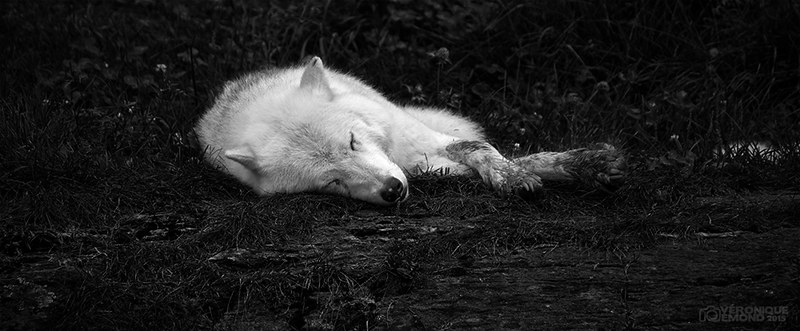
IMG_7394 
Asleep by Véronique Emond


Wolf Hunting Closed in North Fork District Near Glacier Park

A total of 16 wolves have been taken by hunters in Northwest Montana Region One
The hunting and trapping of all wolves in the North Fork Flathead River drainage west of Glacier National Park has ended, wildlife officials announced late last week.

Two wolves were reported killed in Montana Wolf Management Unit 110, which includes portions of Lincoln and Flathead counties. Montana Fish, Wildlife and Parks closed the district to hunting Oct. 30.

The order halting the hunt came after two wolves were reported killed, meeting the pre-established harvest quota in WMU 110. The district is one of three in the state with quotas. District 313 near Yellowstone National Park also closed Oct. 30 after the quota of two wolves was met. District 316, also near Yellowstone, has had one wolf killed out of two allowed.

As of Nov. 2, a total of 16 wolves have been taken by hunters in Northwest Montana Region One compared to 13 at this time last year. A total of 50 wolves have been harvested statewide compared to 48 this time last year.

source


Monday, November 2, 2015

#Wolf of the Day


Fall Wolf 
Fall Wolf by Mark Dumont


How Wolf Patrol's Rod Coronado is pissing off Wisconsin hunters

Rod Coronado (bottom) says he's ditched his militant activist ways, but the hunters he videotapes are fuming.
Rod Coronado (bottom) says he's ditched his militant activist ways, but the hunters he videotapes are fuming. Courtesy of Wolf Patrol

Rod Coronado spends much of his time cruising northern Wisconsin. His camouflaged truck with a hound box in the bed helps him blend in with the hunters who despise him.

A sportsman himself, Coronado wasn’t roving Chequamegon-Nicolet National Forest to bow hunt. Rather, he’s been keeping tabs on other hunters.

The grizzled animal rights activist is the founder of Wolf Patrol, an organization primarily focused on preserving the gray wolf population in the Upper Midwest. Wolf Patrol’s Wisconsin mission, which has invoked the wrath of hunters and lawmakers, is part vigilante, part research. “We want to document and see that people are prosecuted who are violating wildlife laws,” Coronado explains. “We’re not trying to stop all hunting. We are simply trying to ensure that those methods of hunting that negatively impact other wildlife are looked at more closely.”

The 49-year-old leads a four-person crew on what he calls “citizen monitoring” trips. Coronado’s team films hunters and documents baiting and trapping. Bear hunting with hounds and bait has been a particular focus, as he says other animals, including gray wolves, are conditioned to look for bait boxes. In one area he monitored during this year’s bear season, Coronado said seven hounds — trained only to chase — were killed when overmatched by wolves. “The bigger conflict isn’t hunting [vs.] anti-hunting. It’s not trying to stop people from hunting,” the Michigan resident says. “It’s understanding this is all one woven fabric. … Human activities don’t just affect one target species, but there’s other animals that are affected.”

However, Wolf Patrol’s tactics pissed off enough hunters that a Wisconsin lawmaker proposed a bill that would make it illegal to videotape or photograph hunters, or otherwise impede their hunts. At a public hearing last week, Rep. Adam Jarchow, R-Balsam Lake, accused the group of harassing hunters, waiting outside their homes to follow them, and making noise to ruin their hunts.

Rod Coronado (right) and Wolf Patrol members outside the Wisconsin State Capitol.
Rod Coronado (right) and Wolf Patrol members outside the Wisconsin State Capitol. Courtesy of Wolf Patrol

Coronado denies the accusations and says his goal isn’t to interfere or be confrontational. He says he maintains a “respectful distance” and doesn't follow hunters into the woods, instead observing from roads.

Still, hunters at the hearing complained of paparazzi-style encroachment and even cyber bullying. Michelle Edwards said Wolf Patrol identified her from a September hunt. The group posted her picture online, triggering a spate of derogatory comments. “What was upsetting was it had been shared, like, 140 times and there was about 40 comments underneath it. Some of them were threatening my life,” Edwards said. “Some of them were saying they were going to hunt me down and hurt me.”

Coronado’s critics assail him as a “radical” — an eco-terrorist with a record. By admission, Coronado was a “cheerleader for illegal activities” in his younger days. In 1995 he was convicted of arson for torching a Michigan State University animal research facility and spent nearly five years behind bars.
But those days are behind him, Coronado insists. He says he’s evolved and now espouses more “sustainable” (read legal) methods. “This isn’t the 1980s anymore for me,” Coronado says. “I’m not chaining myself to anything or slashing anybody’s tires anymore.”

Although Wolf Patrol hasn’t played hunter paparazzi in Minnesota, Coronado has been in contact with a group of St. Paul activists calling themselves Minnehaha Wolf Patrol. To his knowledge, they haven’t done any “citizen monitoring” in yet.

With tighter bear-baiting regulations and a ban on bear hunting with dogs, Minnesota doesn’t have the same issues as Wisconsin, which is why his crew hasn't crossed the St. Croix River, Coronado says. “But don’t think you’re off the hook,” he warns.

source

Alberta should ban bounties on coyotes, #wolves: researcher

Bill Mah, Edmonton Journal
The Alberta government should ban bounties on coyotes and wolves because they are inhumane and ineffective, says a wildlife researcher. John Lucas / Edmonton Journal

The Alberta government should ban bounties on coyotes and wolves because they are inhumane and ineffective, says a wildlife researcher.

A scientific review published in the international journal Animals argues that bounties should be outlawed because, despite a death toll of predators numbering in the thousands, the program doesn’t work. “Just look at the coyotes,” said co-author Gilbert Proulx, a wildlife biologist with Alpha Wildlife Research & Management. “We killed over 25,000 of them in the last five years and they’re still all over the place.”

When bounty hunters shoot, snare or poison coyotes or wolves, it often makes the situation worse for farmers and ranchers in the area because aggressive newcomers move in to take the place of the original predators, he said. “When you kill the dominant residents, then you get all those coyotes or wolves who come from everywhere and they don’t know the territory and they start to do bad moves,” Proulx said. “These guys cause a lot of trouble. They are the ones that kill the caribou, the calves or the cows of a farmer because they don’t know their limits.”

According to Proulx, bounty hunters in Alberta receive $75 to $500 per dead wolf. At least 1,425 wolves have been reported killed since 2010. Dead coyotes bring at least $15. The report says at least 16 Alberta municipal jurisdictions offer or have offered bounties.

Proulx said their deaths by neck snare, strychnine poisoning or wounding by bullets can be slow and agonizing, and endangered or declining species such as grizzly bears, badgers and swift foxes can be inadvertently killed.

But others point to the heavy toll on livestock that coyotes and wolves inflict. A recent study by the Miistakis Institute in Calgary found predators had an economic impact on nearly three-quarters of Alberta beef producers. “If there’s a problem area, for sure we would be supporting putting bounties on these animals because they do cause problems,” said Fred Hays, a policy analyst for Alberta Beef Producers.

The Alberta government does not administer any bounty programs or use them to manage wildlife programs, said Environment and Parks spokeswoman Lisa Glover. Bounty programs are typically administered by municipalities or private land owners.

The Municipal District of Bonnyville offers $15 per coyote and $75 per wolf in its reduction program from October through March. “We run the program because we do see benefits from it,” said Matt Janz, the district’s director of agriculture services. “Coyotes are one of our problem species for our local farmers for predation. We’ve found that by running the program, they have a lot less predation during the year. “During the winter season, when the animals are usually penned up in larger groups, they’re a little easier prey for these carnivores. We’ve seen the benefits of the predation level come down since we started the program.”

Visits to farms by MD officials to issue wildlife poison have dropped from 30 to 40 a year to maybe six, he said.

Proulx argues that predator-human conflicts can be reduced by simply clearing dead animals off the range to avoid attracting predators, keeping animals close to the estate, and protecting them with fences or dogs.


source


Sunday, November 1, 2015

ODFW Attempts to cull wolves with only 81 in entire state


The recommendation goes to the Oregon Department of Fish and Wildlife Commission, which will decide November 9 whether to de-list wolves.

The Global Positioning System collar that allowed people around the world to track the movements of Oregon's famous wandering wolf, OR-7, has stopped working.

The ODFW staff recommendation was not a surprise.

The state's wolf plan calls for initiating a process to consider stripping wolves of legal protections when eastern Oregon hits a population of four breeding pairs for three consecutive years.

Todd Nash, wolf committee chairman for the Oregon Cattlemen's Association, said ranchers welcome ODFW's recommendation and hope the commission follows through with delisting. There are at least 81 wolves and 16 groups or packs located throughout the state.

But wolf advocates and several prominent Oregon wolf researchers questioned the mechanism state biologists used to arrive at those findings.

In testimony urging commissioners to keep wolves listed, a group of scientists outlined the benefits wolves pose to the ecosystem and questioned the parameters state researchers used to justify their recommendation.

"Prematurely weakening gray wolf protections is likely to reverse years of progress, put recovery in jeopardy, and exacerbate conflic,t" the 14 scientists wrote in the jointly-penned letter. Dr. Carlos Carroll, a wildlife ecologist with the Klamath Center for Conservation Research, whose research focuses on habitat, viability and connectivity modeling for threatened and endangered species, expressed concern in his written analysis that the manner in which certain factors were applied in the analysis "is overly optimistic compared to data from well-studied wolf populations," and that the status review relied on information "that doesn't accurately represent what is now known about genetic threats to small wolf populations."

Wolves now occupy 12.4 percent of that area, and are expanding at an annual rate of 860 square miles. Their population is less than one-sixteenth the size Oregon State University scientists have determined the state can sustain.

ODFW's Wildlife Diversity Plan stipulates that delisting an endangered species must be backed by "verifiable" scientific information, which is defined as having been peer-reviewed by independent scientific panel. A group of leading independent scientists this week voiced their opposition to a plan to remove state protections from Oregon's wolves, saying the estimated population of only 83 wolves can not be considered recovered. Federal ESA protection would still be in force in the rest of Oregon.

Russ Morgan, ODFW wolf program coordinator, said delisting wolves would not immediately changed how wolves are managed under the Wolf Plan, but allows the plan to "continue to work into the future".

Wolf advocates and enemies are already gearing up for a fight over the plan review.
"It's guided by the wolf plan," she said.

source

#Wolves of the Day


Arctic Wolf - Wildpark Tripsdrill October 2015 04 
 
Arctic Wolf - Wildpark Tripsdrill by Ralf Reinecke


At the Capitol in Madison, Wisconsin: Public Hearing for the “Right To Hunt Act” Assembly Bill 433

By Keri Lewis
At 9:00 a.m. on October 28th, the Assembly Committee on Natural Resources and Sporting Heritage began its preceedings of bills on the day’s agenda.  As the morning progressed, the public filtered into Room 417N in anticipation for Assembly Bill 433 the “Right to Hunt Act.”

Wolves of Douglas County Wisconsin’s writer Keri Lewis, was in attendance to testify in opposition to Assembly Bill 433, and waited attentively for the bill to be announced.  The majority of the room was filled with hunter camouflage, which comes as no surprise as the Wisconsin Bear Hunter’s Association was encouraging members to appear at the hearing dressed in this classic, hunter attire according to some hunting pages on social media.  Representative Adam Jarchow (R) could be seen mingling with these individuals before the hearing began.

Jarchow introduced Assembly Bill 433, stating that due to new technology and tensions in the woods, it was time to make improvements to the current hunter harassment law.  As it turns out, much of his testimony targeted Rod Coronado and his citizen-monitoring organization.

“This group is known as Wolf Patrol, and it was originally formed when wolf hunting was legal….” explained Jarchow.

Rod Coronado testifying as seen on WisEye.org.

Public testimonies included 23 individuals who testified and in all, 45 in support and 5 in opposition to the “Right to Hunt Act.”  There was definite emotion felt on the part of hunters who claimed to be harassed by Wolf Patrol’s 3-man crew, and admitted to fearing for the safety of their families; yet when prompted for evidence of said acts, not one person could produce a case where Wolf Patrol was cited for their actions.
Coronado also testified explaining,”The reason there has not been one criminal charge against this organization, is because we have not committed one criminal act.”
Also in opposition, Jodi Habush Sinykin, an attorney with Midwest Environmental Advocates, spoke of the freedoms which would be criminalized if this bill was passed; she included observing and photographing activities on public lands in her testimony.
“This bill proposes arguably unconstitutional constraints on freedoms that we fortunately take for granted as American citizens,” explained Hubush Sinykin.
It appeared that the verbiage within AB 433 the “Right To Hunt Act,” described as “impeding or obstructing” an individual who is hunting, fishing or trapping was the larger part of the discussion among the assembly committee.  What constitutes these acts, and how to measure the intent behind them, are ultimately what was discussed among members.

After hours of testimony from both sides, Representative Chairman Al Ott (R) closed with a “tough love” statement, asking bear hunters to examine current polices surrounding their 100-year sport;  he cited the relaxed bear baiting regulations Wisconsin has adopted, in comparison to other midwest states.

In conclusion, the fate of AB 433 the “Right To Hunt Act” will not be determined until the end of the Fall session sometime next month.  Stay tuned for updates regarding this important legislation.

Some Wisconsin Lawmakers Claim Bear Hunters Are Being Harassed

Assembly Bill 433 “Right to Hunt Act” hearing coverage by Susan Bence of WUWM 89.7 FM, October 29, 2015

Wisconsin hunters need more protection. That’s the adamant opinion of some Republicans who control the state Assembly. They’re pushing a bill designed to prohibit individuals from impeding or obstructing a hunter from his or her sport.

The Assembly Natural Resources and Sporting Heritage Committee held a public hearing Wednesday at the state capitol to discuss the legislation.

Representative Adam Jarchow says the bill he crafted especially goes after extremists who are harassing bear hunters in the woods. “This group known as the Wolf Patrol and it was originally formed when wolf hunting was legal and they would fight against legal wolf hunting in Wisconsin,” he says.

Jarchow says when a federal judge put the gray wolf back on the endangered list, and halted Wisconsin’s hunt, the patrol shifted its focus to bear hunters.

“Some of these folks will wait outside the homes of hunters where their families live, and wait for them to leave, so they can follow them around to their hunting sites. They’ll then follow hunters through the woods with video cameras documenting legal acts of hunting. This is much like stalking,” he says.

Robin Prince is one of the hunters who feels threatened. A resident of Clear Lake, she says bear hunting is part of her heritage.

“That being said, I don’t have a problem with people simply enjoying the outdoors – your berry picking, your hikers etc. I welcome them to the conversation; they don’t all agree with what I’ve got going on, but they have the request to ask question. The problem I have is when someone stalks me and my family – mainly my dogs. I don’t want someone waiting for me at the end of the driveway; waiting to follow me or film me without my permission,” Prince says.

Melanie Weberg says feelings of intimidation aren’t limited to hunters. The Polk County resident says rural, non-hunting residents feel vulnerable when bear hunters train their dogs.

“I know property owners in five counties – Rusk, Bayfield, Douglas, Burnett and Polk – who have been verbally and physically intimidated by parties of bear hounders during summer and fall. I know of a married couple in their 80s in Bayfield County, I didn’t mention that, who lost their beloved dog to a pack of bear hound dogs who were afraid to report it for fear of retaliation,” Weberg says.

Keri Lewis thinks the proposed law goes against First Amendment rights. Originally a Hayward resident, Lewis now lives in Milwaukee.

“Specifically freedom of speech, press, assembly and petition. I feel this act would hinder the public’s right to know what goes on during specific hunting season, for example bear hunting on public lands. I would also like to add the amendments in Bill 433 would restrict recreational activities for any person who would wish to be on public lands where there are hunters,” Lewis says.

The spotlight glared on Rod Coronado throughout much of the hearing. The Michigan resident created the Wolf Patrol.

“ I don’t think I’ve ever heard so much mudslinging against one organization in such a short period of time but it could all be answered by looking at the video tapes that we take on public lands of hunting activities that we believe negatively impact wildlife,” Coronado says.

The assembly committee spent a full half hour grilling Coronado. He maintains his activities are legal.

“We have never said anywhere on Wolf Patrol that we are opposed to hunting, but we are in favor of amending existing legislation and laws that effect wildlife and the way we do that is by participating in the public process and encouraging other people to participate in the public process. The way we do that is by showing them what those practices look like,” Coronado says.

Bill Welch with the Wisconsin Bear Association calls Coronado’s tactics blatant intimidation. “These activists should not be considered activists, but self-policing extremists who stalk, photograph, condemn, harass and videotape hunters who are abiding by their sport lawfully. I am fully supportive of this act protecting hunters’ rights and privacy as they lawfully hunt or trap,” Welch says.

While Wednesday’s debate was long and emotional, the Assembly committee did not make a decision on AB 433. That vote is left for another day.

For more information:
 
Sign The “Right To Hunt Act” Would Criminalize First Amendment Rights! Petition
Find your state representatives to oppose the “Right To Hunt Act.”
Assembly Bill 433 Public Hearing from Wisconsin Eye (starting at 1:14:00)
News coverage from WUWM 89.7 FM with audio segment
Assembly Bill 433 “Right To Hunt Act” 2015 text
 
(Good job, Keri! Looking forward to more of your reports!) ~ Lin