"There never really was a Big Bad Wolf," my hunter father
taught me when I was raised on a U.S. Forest Service wilderness in the
High Sierra. "Wolves are all gone from these forests." Then he added,
"But the wolf is a mighty hunter. And wolves have tight-knit
families--just like us."
Like the wolf packs, my family hunted and
lived off wild game. Growing up, my father would take me along on his
hunting trips to keep camp. These hunters weren't looking for trophies,
so much as sustenance. Their job as men, alpha males, and fathers was to
feed their families.
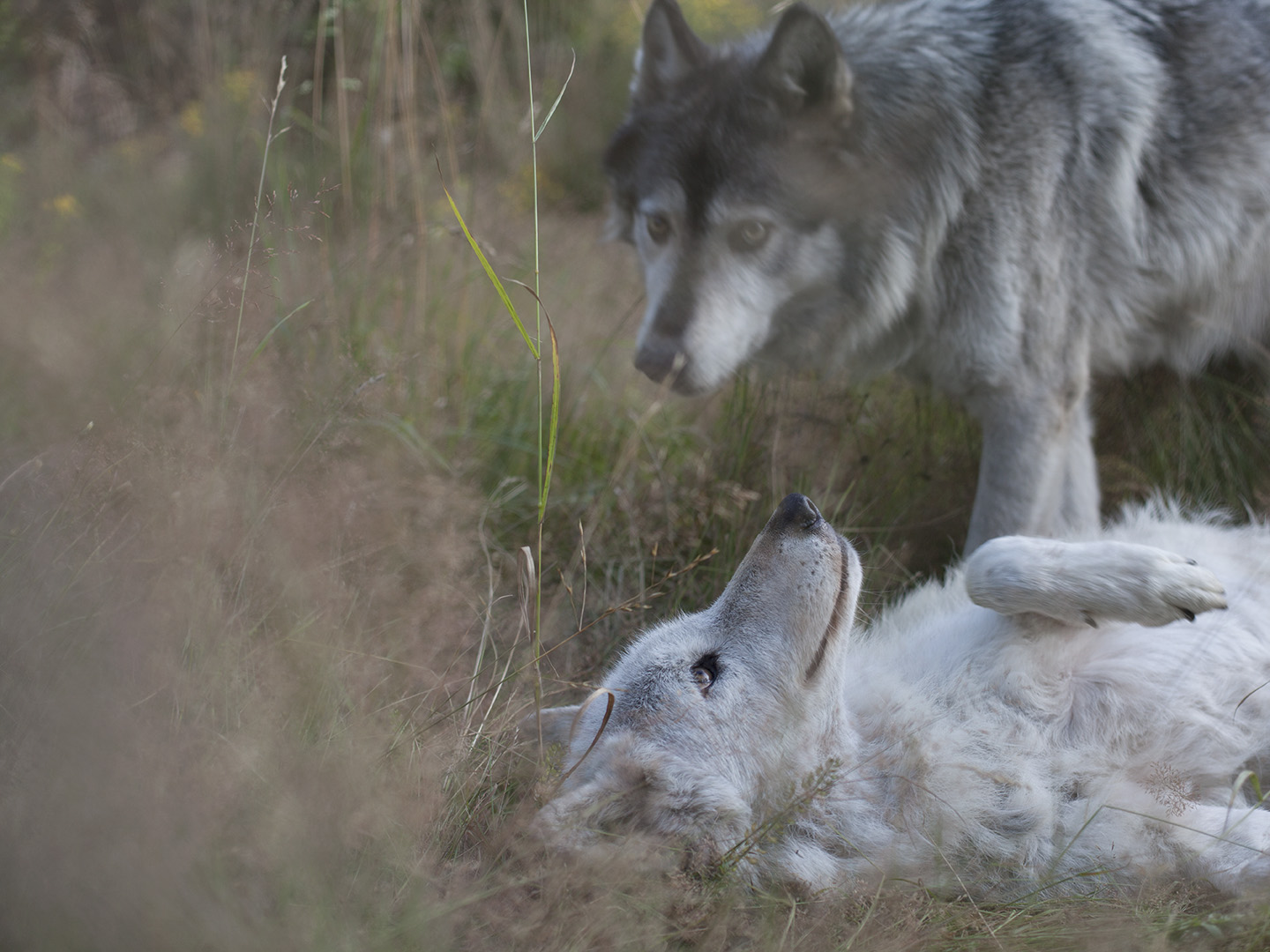
 photo credit
: Annie Marie Musselman
This Father's Day, I'm reminded of how I grew up strong on my father's wild game, by a current
New York Times editorial,
arguing that the "alpha male stereotype comes from a misunderstanding
of the real thing. In fact, the male wolf is an exemplary male role
model."
Wolves and men as good role models are also echoed by Diane Gallegos, Executive Director of
Wolf Haven International,
a nationally recognized sanctuary for captive-born and displaced wolves
in Washington State. Even among these sanctuary wolves, she says, it's
all about family--and alpha males are loyal providers. They really are
Big, Good Wolves.
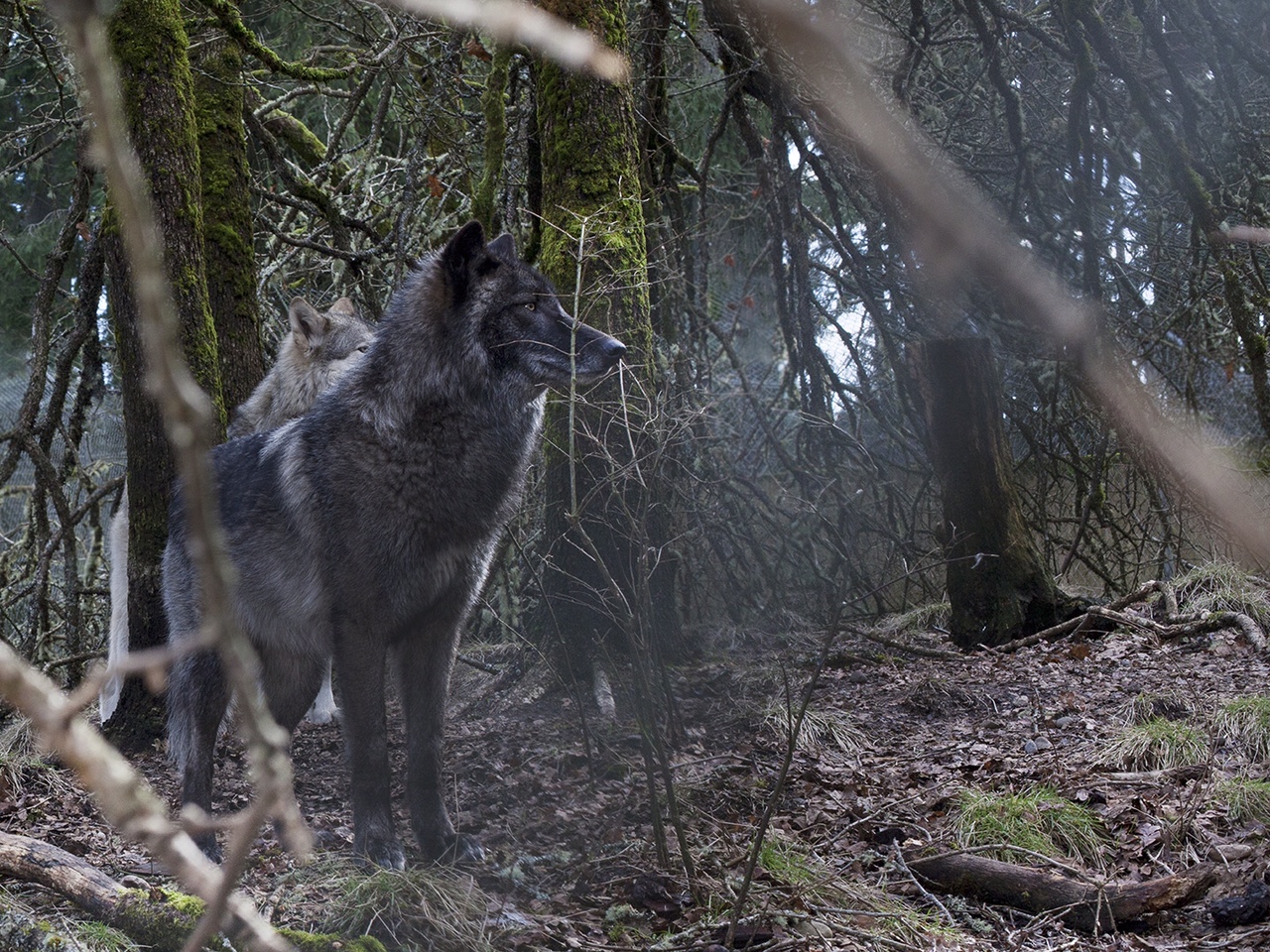
 photo credit
: Annie Marie Musselman
Gallegos explains
that in May, the Mexican Gray Wolf pair gave birth to a litter of three
pups as part of the Species Survival Plan (SSP) captive-breeding
program. The
Mexican Gray Wolf,
also known as "the lobo," is one of the rarest mammals in the world.
Every pup born now is crucial to the survival of this most highly
endangered subspecies of gray wolf. The wolves cared for at
Wolf Haven--mother (Nieta) and father (Coal)--are fond, attentive parents as documented in
this video of Nieta (F962) and Coal (M752) nuzzling. As in the wild, Coal then regurgitates to feed his mate and pups.
Like
many human hunters, alpha male wolves hunt food for their family packs
year-round. Men and wolves should be respectful allies, not enemies. We
need more positive stories of wolves and men.
Here's one of my favorite:
My
friend, Mike, a strapping hunter who is deaf and loves gardening and
boat design, tells the story of hunting with his Alaskan buddies. "I was
alone up on the ridge with a grizzly nearby and a pack of wolves just
below me," he says. Not the best position as night and cold descended.
"I tell you, I was afraid of those wolves and one of them was acting
kinda crazy, spinning around and howling. Maybe he was playing."
Finally
Mike had to risk hiking down to camp. Most of the pack had moved behind
him. "But I had to scoot right past that lone wolf . . ." he pauses
with a smile and the punch line: "And when I got back to camp, it was my
buddies who duct-taped me in my sleeping bag--and then, they threw me
in the river."
Like Mike, there are
many hunters
who understand the beneficial top-predator role that wolves offer.
Since wolf reintroduction, scientists have discovered that when wolves
return to their natural habitats, they actually
help restore the ecosystem: Overgrazed trees regenerate and there's a dramatic increase in biodiversity.
Here
in Washington we're still in the very early stages of wolf recovery.
Wolves are on the state's endangered species list; to recover they need
15 breeding pairs. Currently, there are only
five such pairs,
out of 16 packs--68 wolves total. Can Washington now manage its wolf
reintroduction more sustainably than other states, like Wyoming, Idaho,
and Montana who focus on
"lethal control"?
"Washington has the best wolf management plan in the West," says
Conservation Northwest's Mitchell Friedman.
"We have an historic chance to be a model for wolf management," adds Diane Gallegos.
She credits the collaborative work of the
Wolf Advisory Group
to listen to sportsmen, ranchers, and wolf advocates as they focus on
science, education, and enlightened solutions. Ranchers are learning
non-lethal and
practical tools
to protect their livestock, employing range riders (off-vehicle
herders) and not grazing sheep near known wolf ranges. If ranchers sign a
cooperative agreement with state wildlife officials to practice
"conflict avoidance" they can receive radio collar alerts when wolves
are near livestock.
Pacific Wolf Coalition reports that 100,000 West Coast residents joined
one million citizens from across the country urging the government to
maintain federal protection for gray wolves--even as a
new bill threatens to reverse recent wolf protection and revive brutal wolf hunts in the West.
Cutting-edge
research requires new ways of living with wolves. A Washington State
University study reveals that traditional wolf control tactics just
don't work--killing wolves actually
increases livestock predation.
It's counter-intuitive, but researchers discovered that killing wolves
disrupts their social structure. So wolf hunting may actually hurt
ranchers.
Jim Dutcher of
Living with Wolves explains,
"When you decimate a pack--especially the experienced alphas--you end
up with a younger, dysfunctional, and smaller pack. The young wolves
don't know how to take care of themselves or hunt down larger prey. So
they go after slower, easier livestock."
Alpha males teach the
young to maintain and assure the survival of the family pack. It's not
about dominance--in fact the alpha female is a true peer with her mate.
Alpha males, comments wolf biologist, Rick Intyre, demonstrate a "quiet
confidence and self-assurance . . . You know what's best for your pack.
You lead by example . . . You have a calming effect."
 photo credit:
Annie Marie Musselman
We can find a calmer,
more sustainable and balanced way to live with wolves, based on
science, not politics. Or prejudice. The key is dialogue, education, and
social tolerance. As
rancher, Sam Kayser,
who pastures his cows on public land near Teanaway, explains, "I want
to co-exist with wolves . . . there is room for all of us out there."
And this Father's Day there is room for many more stories of Big Good Alpha Males, both human and wolf.
Brenda
Peterson is a National Geographic author of 18 books, who has covered
wolf issues for national medias since the Yellowstone reintroduction in
1995. Short sections of this article originally appeared in "Living with
Wolves" Ampersand magazine. For more: www.BrendaPetersonBooks.com
Sign a petition to help stop wolf hunting in Alaska.
source