Friday, May 29, 2015

WDNR Board Approves Changes In Cable Restraint Rules: Inspite of Public Oppositon

By Rachel Tilseth, the founder of Wolves of Douglas County Wisconsin
on May 29, 2015
     
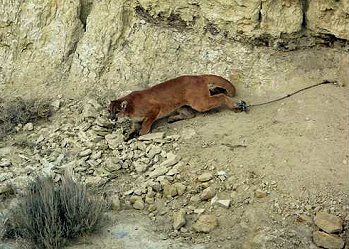
Photograph is fromMountain Lion Foundation http://www.mountainlion.org/featurearticleguest-smoke-bomb.asp

 In the news this week WDNR board approves changes in cable restraint rules that could place wolves and other large Carnavores at risk. These new rules are designed to catch smaller wild animals such as fox, coyote and bobcats.

Read the following  full story from Wisconsin Public Radio: http://www.wpr.org/dnr-board-approves-changes-cable-restraint-rules

DNR Board Approves Changes In Cable Restraint RulesTrapping Devices Are Used To Catch Animals Like Foxes, Coyotes 

Thursday, May 28, 2015, 1:55pm
By Chuck Quirmbach

“The Department of Natural Resources Board approved changes in the use of an animal trapping device called a cable restraint on Wednesday.
“The board has given the green light to several proposals approved at April wildlife hearings, including the use of foot-activated cable restraints and changes in restraints to improve the catching of smaller animals like foxes, bobcats and coyotes. Melissa Tedrowe of the Humane Society of the United States asked the board to oppose the modified restraints and to prohibit trapping where wolves may be present.”
“Traps including cable restraints are cruel and non-selective. They indiscriminately harm wolves and all other species whose feet touch the ground,” said Tedrowe.”
“However, the DNR says the restraints are designed not to injure an animal. The board passed the trapping changes on a voice vote.”
“The issue could come up later if the gray wolf is taken back off the endangered species list in Wisconsin, making it legal once more to shoot and trap wolves.”

© Copyright 2015, Board of Regents of the University of Wisconsin System and Wisconsin Educational Communications Board.

Photograph is from a trappers association from a state on the east coast. This fox is definately suffering 
in a leg hold trap they say is desined to be painless.

WI residents can call thier representations and ask them to opose this new rule on traps concerning use of leg hold cable restraints designed to catch Bobcats, foxes and coyotes. Who’s my Wisconsin reps: http://legis.wisconsin.gov/

For more on this top check previous blogs:
http://wolvesofdouglascountywisconsin.com/2015/01/25/the-truth-about-trapping-the-use-of-a-snare-trap-is-the-most-violent-method-used-to-kill-an-animal-by-rachel-tilseth/

http://wolvesofdouglascountywisconsin.com/2014/12/30/endangered-wolves-a-commodity-for-the-fur-fashion-industry-trapping-is-made-possible-by-wildlife-agencies/

http://coyotes-wolves-cougars.blogspot.com/2012_07_01_archive.html is of a coyote suffering in a leg hold trap


Thursday, May 28, 2015

#Wolf of the Day

Wolf
Wolf by Jens Stenneken
 

#Wolf adoption becomes part of species recovery plan

5 hours ago  • 


It was around this time a year ago when state and federal biologists ventured into the Apache Sitgreaves National Forests, crept into the den of a female Mexican gray wolf who was briefly being held in a crate and whisked her six pups away.

The robbery of sorts was for a good cause: two of the pups (the other four were later returned to their mother) were going to be transferred to the den of a wild Mexican wolf pack in New Mexico’s Gila National Forest as part of an experimental process called cross-fostering. Never tried before on the endangered Mexican gray wolf, the tactic has been a key tool for other species’ recovery by infusing wild populations with genetically diverse animals that were born in captivity.

The Arizona pups, whose mother had been bred in captivity, were brought to the den of a wild female wolf that had recently given birth to three pups of her own. When they brought in the newcomers, biologists rubbed them in the dirt of the den and rubbed the bellies of the three original siblings to get them to urinate on the new arrivals so they all smelled the same.

Then the humans placed the tiny animals, weighing one to two pounds each, in a huddle before the mother arrived home. Part of the reason why the process works is because wolves can’t count, making it harder for them to distinguish between adopted pups and their own.

A year later, one of the cross-fostered wolf pups has been tracked via a radio collar and officials say they believe the other is alive as well. But while state wildlife managers have called cross-fostering a success and a promising tool for the future, many people acknowledge it’s also a tricky, delicate process that likely won’t be enough to form the foundation of the species’ recovery.

“Cross-fostering is a tactic, not a plan,” said Richard Fredrickson, a Montana-based biologist who has been on the Mexican Wolf Recovery Team since 2011. “In my opinion it’s very unlikely to really address the problem (of species recovery).”

Diversity needed

The Mexican wolf is the rarest subspecies of gray wolf in North America, with a current population that descends from three lineages and just seven “founder” animals. Wildlife managers have counted at least 109 animals in the wild, but because the animals are so closely related, inbreeding accumulates quickly, Fredrickson said.

State wildlife officials and wolf advocates agree that maintaining genetic diversity, which is key to establishing a stable population that can adapt to changing environmental factors, can’t happen without human intervention.

Cross-fostering is "one of most valuable tools we have in managing genetic diversity,” said Jim deVos, assistant director for wildlife management with the Arizona Game and Fish Department.
The process infuses different genes into the wild population by allowing biologists to hand-pick pups that are the most genetically distinct. It’s also preferable to releasing captive adults into the wild, because those animals tend to have a higher rate of encounters with livestock and humans, deVos said.

What makes the cross-fostering process so difficult, though, is the fact that it depends on luck. For the process to work, pups from the two litters, one captive and one wild, have to be born within five days of each other and the switch has to be done within the first 10 to 14 days of the birth date, said Jeff Dolphin, Arizona Game and Fish Department's field supervisor for the Mexican wolf project.
Wildlife managers have to be closely monitoring the packs for any hope of catching that overlap and taking advantage of it for cross-fostering.

The window for potential cross-fosters this year lasted just 25 days, from April 15 to May 10, Dolphin said. Because the tactic has been used only once with the Mexican wolves, it’s also impossible to compare data on the success rate of cross-fostering versus releasing adult wolves from captivity, said Susan Dicks, a biologist and veterinarian who works with the U.S. Fish and Wildlife Service.

Tactic, not a plan

Emily Renn, executive director of the Grand Canyon Wolf Recovery Project, agreed that cross-fostering is an important tool to promote the recovery of the species.

“I think that anything that is able to get more wolves into the wild is a good thing and any way that they can start increasing genetic diversity of the population in the wild is also a very good thing,” Renn said.
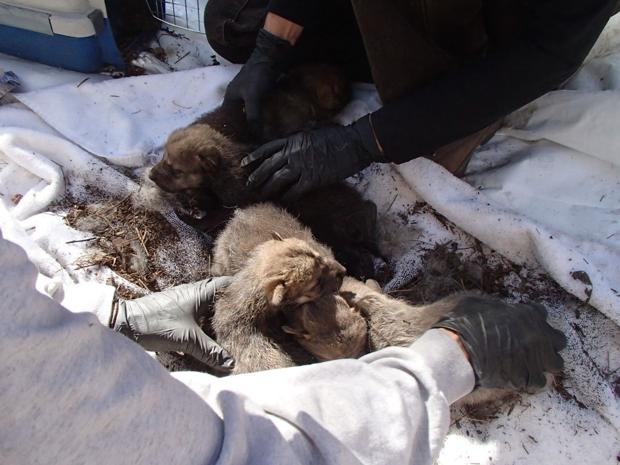
Mexican wolf cross foster

But she stressed that transferring genetically diverse adult wolves from captivity into the wild still is an important part of Mexican wolf recovery that isn’t happening at the rate it needs to be.
Between 1998 and 2014, 95 wolves born in captivity have been released into the wild, though only eight of those releases have happened since 2005.

Focusing on pups “shouldn't prevent continuing to release adult wolves that are more diverse genetically into the wild,” Renn said. She added that relying heavily on cross-fostering to increase the wild population of wolves is “a risky gamble,” she said.

Frederickson also criticized what he described as “inaction” by state and federal officials in the Mexican wolf reintroduction program, calling it the greatest threat to the species.

Government officials need to develop a plan with quantitative goals connected to reducing the degree of relatedness between the animals that has a short-term and long-term timeline, he said.

As for the Mexican wolf recovery plan that was supposed to accomplish some of those objectives, it was put on hold more than two years ago, said Jeff Humphrey, spokesman for the U.S. Fish and Wildlife Service. Humphrey estimated it will be another two to three years before that plan is finalized.

source

Experience with wolves discussed


Posted: Wednesday, May 27, 2015 
VALE — Earlier this month, Ed and Evelyn Sayers were visited by a wolf. 
It was the first time the couple, who raise cattle between Cairo Junction and Vale, have had a wolf encounter in their 19 years of ranching.
 
“We just had one in the middle of our property, but they hazed it out right away,” Evelyn Sayers said.
“Yeah, we got a call on the sixth of May a little after seven in the morning that the wolf was in the middle of our cattle,” Ed Sayer added.

The wolf was likely OR22, a radio collar-tagged animal that spent time this spring south of Vale and west of Adrian before heading out of Malheur County in early May. Its sighting was addressed Tuesday at a wolf workshop that the Sayers attended at the Malheur Education Service District in Vale.

About 20 people attended the workshop, which was hosted by Malheur County Court and the Malheur County Sheriff’s Office. The event intended to inform individuals of the protocols and procedures when dealing with suspected wolf kills.

Philip Milburn, a wildlife biologist for the Malheur District with the Oregon Department of Fish and Wildlife, was one of the speakers. He spoke of the online wolf reporting system, recent wolf sightings in the area and the current policies regarding the issue.

According to Milburn, there are currently 77 known wolves in the state, some of which have been radio collared in order to track their whereabouts.

However, at this point there are no established wolves in the area, yet if ever there is a sighting, the online wolf reporting system is where these reports are tracked.

Oftentimes, these sighting are notified via phone to the Oregon Department of Fish and Wildlife, and assist in discovering packs or established wolves.

In existence to protect the species is the current Oregon endangered species law which prohibits harming of wolves.

Greg Jones, U.S. Fish and Wildlife Service’s wildlife services specialist in Malheur County, shared with the crowd the importance of safeguarding the evidence and what to look for in a suspicious killing of livestock.

As communicated by Jones, it is essential to preserve evidence of a possible wolf attack until a wildlife services agent arrives to the scene.

A suspicious death could include trauma, bitemarks, tracks and signs of struggle.

Wallowa County Undersheriff Fred Steen shared his wolf encounter experiences, tips and pictures of what to look for in a suspected wolf depredation.

On numerous occasions, Steen has dealt with the realities of wolf depredation in his county by conducting investigations side by side with the department of fish and wildlife.

He also spoke of preserving the scene to gather evidence by taking pictures, measuring bitemarks, skinning the deceased animal to get a better look at possible trauma, because often it is not visible to the eye.

To provide visuals for livestock producers he presented pictures and video of wolf attacks he investigated.

Evelyn Sayers said it was comforting to hear from Steen.

“It was a little funny with the sheriff talking, because it was like he preaching to the choir, because we all feel the same way,” she said. “So it was nice to hear how the law enforcement feels and that they understand how we feel.”

source

Wednesday, May 27, 2015

#Wolf of the Day


Timberwolf - Welpe 
Timberwolf pup by C.S.Fotodesign 


Hearing the howl of the wolves

Stephen Hilger, Community Columnist 

The howl of the wolf is a sound that summons polarizing emotions.

For some, the unsettling howl of a wolf is one of the scariest sounds imaginable. In it, we hear the wolf as the villain of our folktales; a constant threat to our livestock, children, and way of life. Yet, others hear a more optimistic tone in the wolf's howl. They hear a primeval reminder of our origins in wilderness, embedded with a message that wilderness, which was once lost, can be regained with effort.

In the wolf's howl, we hear our values.

Currently in Wisconsin, we are grappling with this age-old dilemma of how to live with wolves. Our Republican leaders have pushed forward legislation that seeks to decrease Wisconsin's fledgling timber wolf, or gray wolf, population. Timber wolves in Wisconsin have rebounded from complete extirpation in 1960, to an estimated 800 animals in 2011. In 2012, Gov. Scott Walker and the Republican legislature opened a wolf hunting season that barbarically allowed the use of dogs and traps.

In 2014, a federal judge ordered an end to wolf hunts because they violated the Endangered Species Act. In February, Rep. Reid Ribble brazenly introduced legislation in Congress that sought to de-list timber wolves from the Endangered Species Act so Wisconsin could continue its wolf hunting program. It is clear from their actions that when these leaders hear the wolf's howl, they hear a threat, particularly to business and deer hunting interests.

Yet at one time, Wisconsin's greatest ecological thinker, Aldo Leopold, also thought of wolves as a dangerous predator incompatible with humans. In "Think Like a Mountain," Leopold describes encountering a mother wolf and her cubs while hunting in New Mexico. Like many hunters, Leopold believed that, "because fewer wolves meant more deer, no wolves would mean a hunter's paradise." So, he and his partner lifted their rifles, took aim, and fired. After the melee of bullets, the mother wolf lay collapsed on the mountainside, dying from her wounds. While standing next to the perishing animal, Leopold "watched a fierce green fire dying in her eyes."

This life and death moment was a revelation for Leopold. He felt that, "After seeing the green fire die, I sensed that neither the wolf nor the mountain agreed" with the view that a smaller wolf population was good for the earth and its inhabitants.

This encounter led Leopold to believe we must "think like a mountain" when interacting with predators. He recognized that wolves are an essential part of the ecosystems they inhabit. Without them, he knew that the ecosystem and the deer population he sought would be jeopardized. He suspected, "That just as a deer herd lives in mortal fear of its wolves, so does a mountain live in mortal fear of its deer." For once wolves are removed, deer populations devastate an ecosystem's flora through overgrazing. Overgrazing leads to desertification, damaging the land for all animals that depend on it.

Perhaps the largest proponents of limiting wolf populations in Wisconsin comes from a faction of deer hunters. They, like young Leopold, believe that more wolves mean fewer deer for hunters. The scientific literature, however, suggests that wolves play only a minute factor in decreasing deer populations. In a study of the effects of wolves on deer populations in the northern forest hunting zones of Wisconsin, researchers documented that in the 1996-1997 winter, 125,894 deer were harvested by rifle and bow hunters, a staggering 70,000 deer were estimated to die by harsh winter conditions, an estimated 10,000 deer died as a result of motor vehicles, leaving only an estimated 2,250 to 2,700 deer consumed by wolves. As Leopold believed, wolves actually play a positive role on the health of deer populations as they cull the old, wounded and sick deer, leaving more resources for healthy deer to thrive and repopulate.

There are real problems caused by living in proximity of wolves, most notably in the damage they cause livestock. But believing that living with wolves is impossible or even undesirable is shortsighted. Like Leopold, we must "think like a mountain" about the long-term costs and benefits of living with wolves and other predators. Then, we will recognize as he did that wolves play a critical role in keeping our natural ecosystems healthy.

We must learn to listen to the howl of the wolf as the mountain would and hear in its song the wolf's rightful place in the world.

Stephen Hilger is an Appleton resident. He can be reached at hilgerst@gmail.com. 

source 

Wolf euthanized at Oshkosh zoo after biting child

Published:
wolf close-up top story bug HD 08092012-NEWBUG
The City of Oshkosh says a wolf at the Menominee Park Zoo has been euthanized after it bit a child last Friday.

The city says the child gained access to a non-public area of the zoo and put their fingers through the fence. The child received minor injuries from the wolf, according to the city.

The city says the wolf was euthanized following consultation with the Winnebago County Health Department and State Division of Public Health. The wolf was also tested for rabies but the tests came back negative.

The city says the incident is under investigation but wants to assure the public that the zoo is safe.

 source

Running Dogs on WI Wildlife Ten Months Out of the Year: A Barbaric Culture

By Rachel Tilseth, the founder of Wolves of Douglas County Wisconsin
Every year starting on July 31 to May 1 baying hounds and the screams of terrified animals ring throughout the woods in WI.

Life for Northwoods WI residents, including wolves, is not quiet because ten months out of the year dogs are allowed to run on wildlife. I’ve seen hounders trucks parked along the rural roads and had to dodge dogs in the middle of the road. I’ve listened to the baying of lost hounds and seen terrified deer with fawns. It’s not quiet in WI’s Northwoods. Hounder’s slogan is “Run the Woods” and it’s barbaric and has no place in a civilized society.

Every July WI bear Hounders train thier dogs.

Hound hunting dogs tangle with alpha female wolves defending their three to four month old pups. This results in dead dogs and thier handlers are reimbursed up to $2,500.00 per dog killed by a wild WI wolf. #BanHounding #KeepWolvesListed

screen shot from a MI video of hound hunting dogs attacking a wounded coyote

Conflicts continue between wolves and hound hunting dogs even though wolves are back on the Endangered Species Act as of December 2014.

Hound hunters believe it’s thier right to run dogs on wildlife. Read more on this in a previous blog:http://wolvesofdouglascountywisconsin.com/2015/02/01/hound-hunters-right-to-run-dogs-versus-land-use-ethics/
 
For two years wolf Hounder’s chased down wolves during WI wolf trophy hunt and it’s no wonder a federal judge ordered Great Lakes Wolves back on the ESA for this abuse of a once endangered species!

Young male wolf killed by use of dogs 2014 WI wolf trophy hunt

Concern over whether hound hunter’s dogs caused the wound on this beautiful 80 pound male wild WI wolf (displayed in the above photograph) led me to call this into the WDNR violation hot line on Wednesday 12/03/14. My response at first glance of this dead wolf displayed on social media sent me into, first immediate shock, next deep sadness, then spurred me into action. Read more on the horrible death of this young male wolf in a previous blog:

http://wolvesofdouglascountywisconsin.com/2014/12/08/wolf-killed-wdnr-violation-hotline-follow-up-leads-to-questions-of-ethics/
 
Irresponsible wolf management in WI.

Although wolves are federally protected since December 2014 there are several anti wolf bills in congress right now calling to delist them and give management of wild wolves back to the states. WI allowed the use of dogs to chase down wolves with little or no enforcement causing conflicts between wolves and dogs is not responsible.

Running dogs on WI wildlife has become a culture of violence. Just how violent is it?
It is a legal practice to place wild animals in an enclosure and set hound hunting dogs on them. The training method called penning is legal in WI.

a wild coyoted trapped in a pen for the purpoise of training hound hunting dogs

I’ve spoken with an ex hounder that told me he witnessed a hound hunter’s pack of dogs tearing apart a wild bear and killing him.

Every WI citizen should be appalled by this practice of torture and butchery happening ten months out of the year in WI’s woods.

 
More on this topic:

WI Wolf Hounding  by Britt Ricci http://wolvesofdouglascountywisconsin.com/2014/10/29/guest-blogger-britt-ricci-wisconsin-wolf-hounding/

Wolf hounding begins in WI by Rachel Tilseth http://archive.postcrescent.com/article/20131129/WOF07/131129015/Column-Inhumane-wolf-hounding-needs-outlawed-Wisconsin

Rachel Tilseth founder of WODCW debates hounder’s http://www.greenbaypressgazette.com/story/sports/outdoors/hunting/2014/08/01/compromises-elusive-comes-wolf-hunt/13493935/
_______________________________________________________

source


Tuesday, May 26, 2015

Please RT, the APEX Protection Project needs your help to rescue wolfdogs now! Read the story here


Illinois-Rescue-01-400jpg
ILLINOIS FUR FARM WOLF RESCUE:
APEX SUPPORTS WOLF CONNECTION’S RESCUE OF THREE WOLFDOGS BRED AT AN ILLINOIS FUR FARM


11128462_10153307120459363_7880152734273172423_oWhen the phone rang at the Illinois Department of Natural Resources, it was Officer Scott Wright who answered the call. Animal control was calling with a situation regarding a fur farm that was neglecting its animals, including wolfdogs and foxes. Officer Wright went to the farm to assess the situation. Upon seeing the condition of the farm and the animals, and finding the farm unlicensed, Officer Wright seized the farm and immediately began looking for a solution. The last thing he wanted was to have to put the animals down, so he set to the task of finding safe haven for them.
Officer Wright first reached out to colleague Scott Ballard who was filling in for the endangered species program manager at the time. Mr. Ballard is a Division of Natural Heritage biologist and herpetologist (reptile specialist). Neither man had any experience with wolves, but they decided to tackle the situation together.

Mr. Ballard was able to contact his resources in the USDA and the zoo industry to get the ball rolling. Once the ball began rolling, it picked up a momentum that neither man ever expected. In gathering the information for this article, we tried to research everyone involved in this incredible rescue. We want to apologize if there is anyone who contributed, but isn’t mentioned here. Once the word was out, the wolf and wolfdog community across the country quickly and passionately united to help. Officer Ballard said he’d never seen anything like it. He was amazed, impressed, and really grateful.

11041846_10153307120464363_5432846981945559914_o (1)Right away, a zoo in Texas offered to take 7 of the wolfdogs and a large sanctuary in Washington offered to take two. That left 8 and the euthanasia date was quickly approaching. Then Mr. Ballard was put in touch with Oliver Starr, a wolf advocate and educator on the west coast, as well as Susan Weidel, the Rescue Coordinator at W.O.L.F. Sanctuary in Colorado. Both Susan and Oliver, became integral parts of the rescue, using every resource available to them. Susan was able to take one of the wolfdogs to W.O.L.F. and continued searching diligently for safety for the others. Oliver reached out to his Facebook community including Paula Ficara of Apex Protection Project who is also a volunteer at Wolf Connection in Los Angeles County. She immediately brought it to their attention. At that time, Wolf Connection wasn’t confident that they would be able to help because of the distance, but were open to the possibility if help was needed.


As the wolf community continued to work at finding the last 7 wolfdogs sanctuary, veterinarian Matt Allender of the University of Illinois drove over 4 hours round trip and donated much of his time to make sure all of the wolfdogs had their rabies shots, vaccines, and health certificates so they could travel. And Michigan wolf advocate Amy Gotursix Wright contacted Brenda Pearson of the Michigan sanctuary Howling Timbers, telling her of the situation. Luckily they had room and were able to take four. Three were left.

Days passed and no one could find a home for the three remaining wolfdogs. Officer Wright and Mr. Ballard were becoming concerned that they would have to be euthanized. That’s when Wolf Connection realized they needed to step in and rescue them. The only problem was that the journey would take some planning and fundraising, and WC was working against the clock. Susan stepped in, contacting her rescue colleagues, Jayne and Mike Belsky of The Grey Wolf Central WI Wolfdog Rescue in Wisconsin to see if they would be willing to foster the pups until WC could drive out and get them. Jayne said that although they wouldn’t be able to keep them, they would be more than happy to foster them. She and Mike even drove to Illinois and picked the last three up themselves. The three girls have been staying in a beautiful enclosure at Grey Wolf for the last couple of weeks. Until now, they’ve never had any human contact or exposure to trees or feeling the earth under their feet. Jayne says their curiosity is marvelous. She’s kept the community updated with short videos of the girls exploring and playing in their new surroundings.

abd1da47-4d70-4cd6-bb13-cedde76e75c8

The rescue team, including Apex’s Paula Ficara and Steve Wastell (who is WC’s Lead of Operations), will be driving out on the 31st this month to pick the girls up. It’s an estimated $4000 rescue with all travel expenses and vet bills (all three girls will need to be spayed and receive proper vaccines, etc.) and we need your help. Please join Wolf Connection’s largest rescue yet, and make a donation towards the rescue by clicking below. We thank you and our new girls thank you.
wolf_howl_button_white
THE GIRLS WAITING FOR THEIR FOREVER HOME
AT WOLF CONNECTION


___________________________________________________

VIDEOS: SEE THE GIRLS IN ACTION
at The Grey Wolf Central WI Wolfdog Rescue

source 

Follow them on Facebook: HERE

#Wolf of the Day


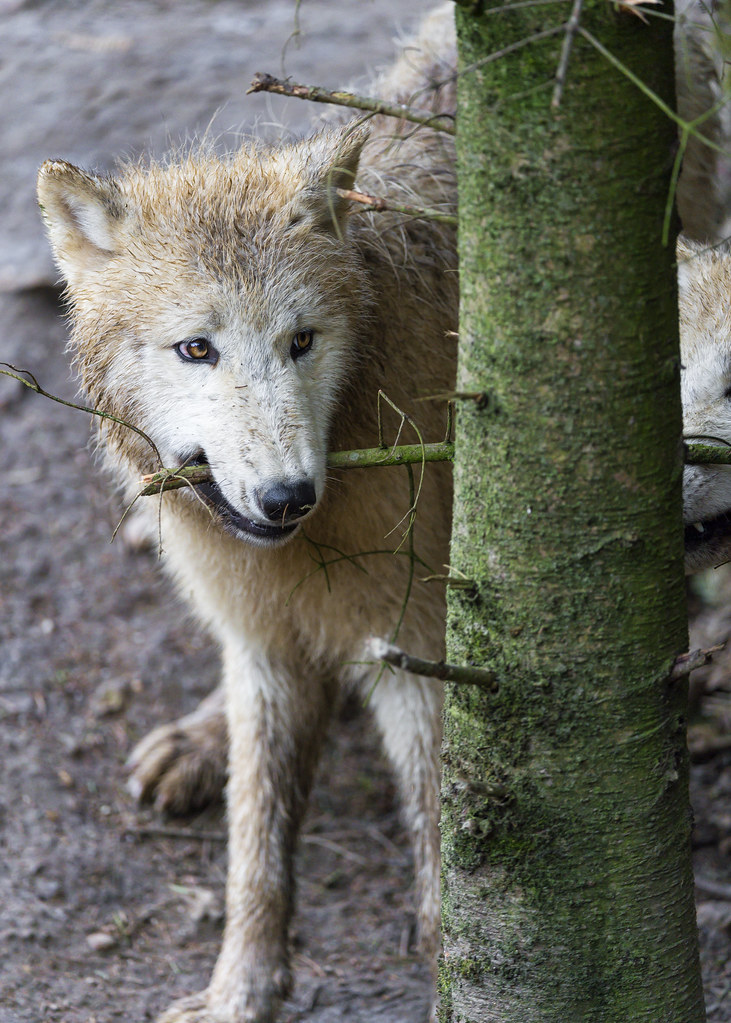
Young arctic wolf biting branch 
Young arctic wolf biting branch by Tambako The Jaguar